Articles
L’inclusion des communautés rurales et des petites entreprises est la clé du succès des paiements transfrontaliers – Dr Ndzana
par Interviewé par Jude Fuhnwi, responsable des médias, Fondation AfricaNenda - 26 février 2026
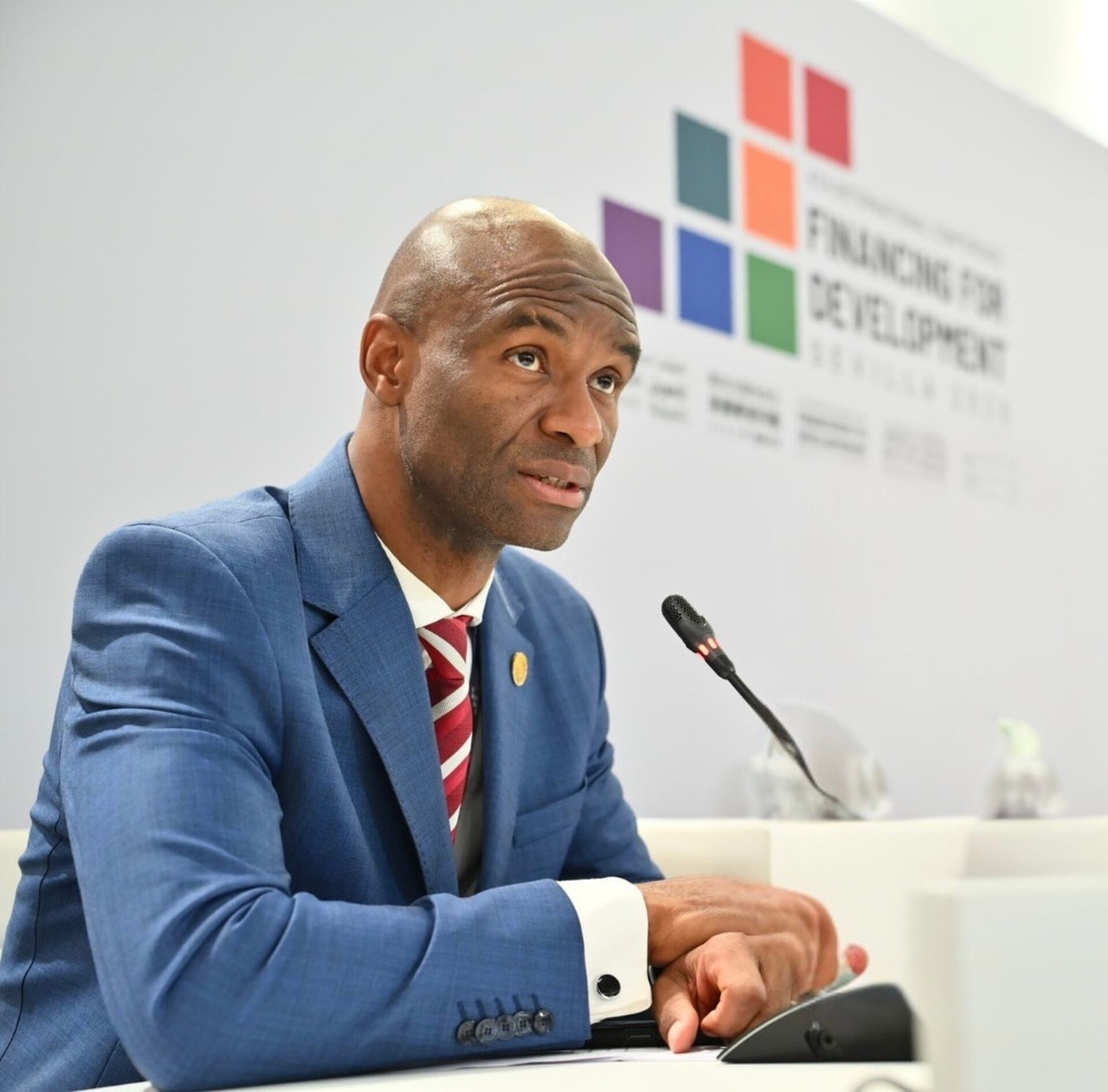
Les paiements instantanés transfrontaliers en Afrique sont à un tournant, passant de l'identification des problèmes à la mise en œuvre de solutions concrètes, déclare le Dr Patrick Ndzana Olomo, expert en économie et chercheur qui occupe le poste de chef de la division des politiques économiques et du développement durable à la Commission de l'Union africaine à Addis-Abeba, en Éthiopie.
Dans cet entretien avec Jude Fuhnwi, responsable médias d'AfricaNenda, il explique que le paysage des paiements en Afrique était fragmenté, avec plus de 40 devises, des réglementations différentes et des systèmes non interopérables. Cette situation engendrait des coûts élevés, limitait les transferts de fonds officiels et freinait le commerce dans le cadre de la zone de libre-échange continentale africaine (ZLECAf). La décision prise le 28 novembre 2025 par l'Assemblée des gouverneurs de l'Association des banques centrales africaines a accéléré le processus d'adoption d'une Directive sur les services de paiement pour l'Afrique (DSPA). Lire la suite :
Docteur Ndzana, comment évaluez-vous les paiements transfrontaliers en Afrique actuellement ?
Nous sommes à un tournant décisif, passant du diagnostic à l'action. La réalité a été le « problème critique »: plus de 40 devises, plus de 55 ensembles de règles de paiement différents et des systèmes qui ne communiquent tout simplement pas entre eux. Le rapport « État des systèmes de paiement instantané inclusifs (SIIPS) en Afrique 2023 » le confirme et met en lumière le coût élevé des corridors de transfert de fonds formels, l'inaccessibilité des options interentreprises et la forte dépendance aux méthodes informelles. Cette fragmentation constitue un frein direct au commerce africain et un obstacle quotidien à la Zone de Libre-échange Continentale Africaine (ZLECAf). Le diagnostic est établi. La volonté politique se traduit désormais en actions concrètes. Le 28 novembre 2025, l'Assemblée des gouverneurs de l'Association des banques centrales africaines (AACB) a chargé son groupe de travail sur l'intégration des systèmes de paiement de piloter le processus d'harmonisation de la réglementation. Nous ne nous demandons plus « pourquoi » ; nous sommes désormais résolument dans le « comment », avec un responsable clairement identifié de ce programme au sein de la communauté des banques centrales africaines.
Comment rendre les systèmes de paiement transfrontaliers plus accessibles aux populations rurales et aux petites entreprises en Afrique ?
C’est le critère ultime de notre réussite. La solution réside dans la mise en place d’un cadre réglementaire adapté grâce à la Directive sur les services de paiement pour l’Afrique (DSPA). La DSPA vise à harmoniser les politiques et les cadres réglementaires et à faciliter les paiements numériques instantanés au détail, au-delà des frontières. Pour un petit entrepreneur ou un agriculteur, cela signifie passer d’un système complexe de circuits formels coûteux et inaccessibles à un système où payer un fournisseur à l’étranger est aussi simple qu’une transaction nationale. Nos consultations avec les parties prenantes, notamment le Fonds d’équipement des Nations Unies (UNCDF), ont renforcé la nécessité d’une approche pragmatique qui catégorise les marchés africains en trois types : les pays en transition, ceux prêts à démarrer et ceux qui développent les éléments fondamentaux. Cette approche fondée sur le niveau de préparation nous permet d’accompagner les pays là où ils en sont et de leur fournir un soutien sur mesure, afin que les avantages de l’harmonisation profitent aux populations les plus défavorisées, et pas seulement aux plus favorisées.
De votre point de vue au sein de l'Union africaine, quel est l'état d'avancement de l'harmonisation des réglementations relatives aux services de paiement entre les États membres ?
Le processus passe de la phase de conception à la mise en œuvre. La DSPA a reçu trois approbations de haut niveau : d'abord du Comité technique spécialisé (CTS) à Yaoundé, puis du CTS à Tunis en 2024, et enfin le mandat catalyseur des gouverneurs de la Banque centrale africaine de l'Afrique (AACB) en novembre 2025. Nous sommes passés de l'intention à la mise en œuvre. Une étude de faisabilité, lancée en juin 2025 et en voie d'achèvement, fournit une analyse concrète des coûts, des avantages et des cas d'utilisation. Nous disposons d'un rapport issu des consultations menées auprès de sept institutions clés (AACB, PAPSS, UNECA, etc.) entre février et juillet 2025. Enfin, une structure de gouvernance, ancrée au sein de l'AACB, est en place. Il ne s'agit plus d'un projet de la Commission de l'Union africaine ou d'AfricaNenda ; c'est un projet africain, porté par ses banques centrales.
Comment les réglementations nationales actuelles en matière de services de paiement peuvent-elles évoluer pour remédier à la fragmentation existante et faciliter les paiements transfrontaliers instantanés et inclusifs ?
La clé réside dans une approche pragmatique et progressive qui respecte les différents points de départ nationaux tout en œuvrant vers un objectif commun. La première phase consiste à établir un socle harmonisant les éléments essentiels à l’interopérabilité de base : des catégories communes pour les prestataires, des normes minimales pour la protection des consommateurs et des exigences harmonisées en matière de lutte contre le blanchiment d’argent et le financement du terrorisme. La deuxième phase est flexible. Il faut permettre aux régions les plus avancées, comme la Zone monétaire ouest-africaine ou la Communauté d’Afrique de l’Est, d’avancer plus rapidement, tandis que les autres peuvent suivre avec un soutien adapté à leurs capacités, comme le recommande le UNCDF. La troisième phase est un cadre fondé sur des principes, dans lequel la DSPA privilégiera l’harmonisation des résultats plutôt que l’uniformisation des règles techniques. Cela donne aux régulateurs nationaux la flexibilité nécessaire pour une mise en œuvre adaptée à leur contexte local, garantissant ainsi un système à la fois interopérable et propice à l’innovation. Nous ne remplaçons pas les systèmes nationaux ; nous leur fournissons un langage commun pour communiquer entre eux.
Comment l'Union africaine s'assure-t-elle que les politiques et réglementations en matière de paiements profitent aux populations rurales du continent ?
Cela fait partie intégrante de notre mandat. Les instructions du Comité technique spécialisé à la Commission de l'Union africaine et à AfricaNenda étaient claires : élaborer une stratégie de paiement et de services qui « soutienne l'intégration économique » et, surtout, « renforce l'inclusion financière ». Il ne s'agit pas d'une simple réflexion après coup ; c'est un pilier fondamental de la DSPA. Nos consultations sont volontairement larges. Nous collaborons non seulement avec les banques centrales, mais aussi avec des organisations comme la GSMA, afin de traiter les questions de confidentialité des données et d'infrastructure pour les utilisateurs de services de paiement mobile, et avec le UNCDF, pour obtenir des contributions essentielles sur l'inclusion financière. En intégrant le Secrétariat de la ZLECAf au sein du Groupe de travail sur la DSPA, nous veillons à ce que chaque discussion réglementaire tienne compte des besoins concrets des commerçants, notamment des opérateurs transfrontaliers informels qui sont le moteur de nombreuses économies rurales. Nous inscrivons également ce travail dans le cadre de la Décennie de l'inclusion financière et économique des femmes de l'Union africaine, afin que ce cadre profite à tous les Africains.
Comment la collaboration entre l'Union africaine et AfricaNenda favorise-t-elle le développement des systèmes de paiement régionaux ?
La Commission de l'Union africaine et AfricaNenda entretiennent un partenariat solide et structuré, fondé sur un programme conjoint de plaidoyer lancé en 2023. Nous coprésidons le Groupe de travail DSPA, organe opérationnel chargé de la mise en œuvre des politiques. Dans le cadre de cette collaboration, la Commission de l'Union africaine assure le pilotage politique, garantissant l'alignement sur les grandes orientations de l'UA, telles que la Stratégie de transformation numérique pour l'Afrique, et la redevabilité devant le Comité technique spécialisé. AfricaNenda apporte un soutien technique essentiel, notamment en pilotant l'étude de faisabilité et en contribuant aux efforts de plaidoyer et de renforcement des capacités.
Quels efforts sont déployés pour concilier les intérêts nationaux parfois contradictoires des différents pays ?
Nous fondons toutes nos actions sur des données probantes. L’étude de faisabilité du DSPA est essentielle pour démontrer les avantages concrets de l’intégration pour chaque pays, en passant d’une politique abstraite à une proposition de valeur convaincante et adaptée à chaque pays. Nous ancrons également l’appropriation du projet au sein de la communauté des banques centrales en confiant le leadership technique au groupe de travail de l’AACB. Ce faisant, nous garantissons que le processus est piloté par des pairs qui comprennent les sensibilités nationales et peuvent construire un consensus par le dialogue. Enfin, nous élaborons un cadre dynamique et adaptable. Les parties prenantes du Système panafricain de paiement et de règlement (PAPPS) et de la Commission économique des Nations Unies pour l’Afrique ont souligné la nécessité d’un cadre capable d’évoluer au rythme des avancées technologiques et politiques. Cela permet aux pays d’avancer à leur propre rythme et atténue les craintes liées à un modèle unique. Nous constituons une coalition de pays volontaires, en démontrant notre capacité à générer des réussites qui inciteront d’autres à nous rejoindre.
D'après votre expérience, quelle idée fausse les Africains ont-ils souvent concernant les paiements transfrontaliers ?
L'idée fausse la plus répandue est que des initiatives comme la DSPA visent à créer un nouveau système de paiement imposé d'en haut, ou une infrastructure supplémentaire. J'entends souvent cette question : « Est-ce un autre système d'échange comme PAPSS ?» La réponse est un non catégorique. La DSPA n'est pas un nouveau système ; c'est le référentiel commun, le cadre réglementaire harmonisé. Lors de nos consultations, PAPSS a lui-même souligné la nécessité de définir clairement ce qu'est la DSPA et ce qu'elle n'est pas afin d'éviter toute confusion. Il s'agit de l'ensemble de normes qui permettent à nos systèmes existants – qu'il s'agisse de PAPSS, des systèmes d'échange nationaux ou des plateformes de paiement mobile – de se connecter enfin de manière fluide, sécurisée et abordable. Nous corrigeons cette idée en communiquant avec rigueur sur tous les forums : la DSPA est l'élément qui permet aux autres de fonctionner. C'est le fondement, et non un nouvel édifice. Nous construisons le cadre réglementaire qui rend possible l'infrastructure que nous devons déjà mettre en place pour tenir ses promesses envers chaque Africain.